




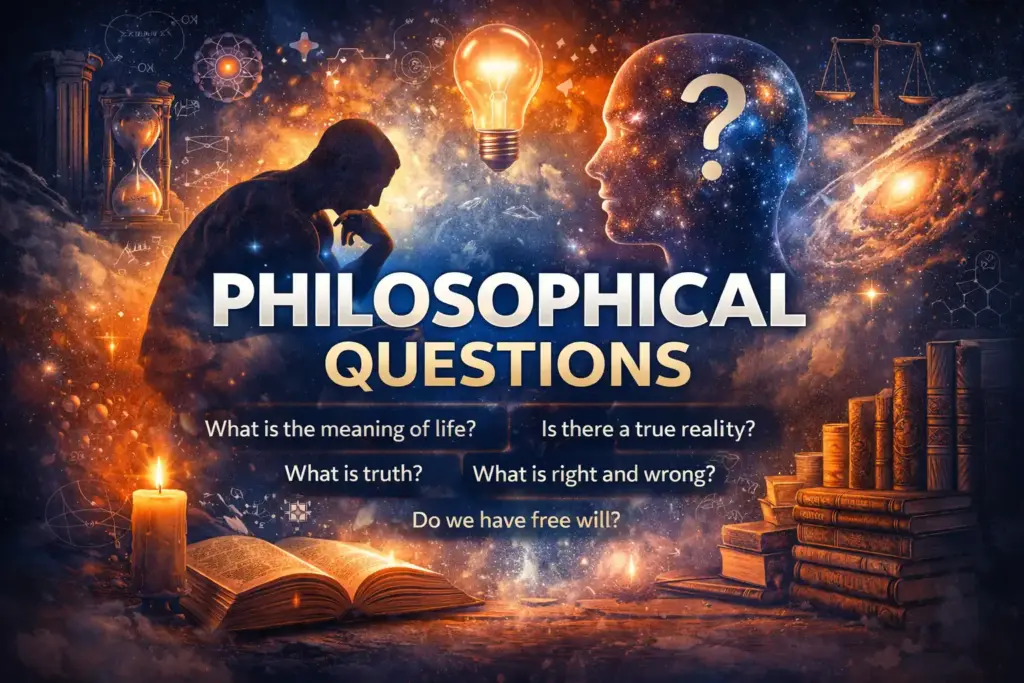
Philosophical questions have fascinated humanity for centuries. These thought-provoking questions explore life, existence, morality, knowledge, and reality. Whether you’re a student, writer, or deep thinker, understanding philosophical questions can expand your perspective and improve critical thinking.
What Are Philosophical Questions?
Philosophical questions are deep, open-ended questions that do not have simple or definitive answers. Instead, they encourage critical thinking, reflection, and discussion.
Unlike factual questions, philosophical questions focus on:
- The nature of reality
- The meaning of life
- Human existence
- Ethics and morality
These questions often lead to multiple interpretations rather than one correct answer.
Why Are Philosophical Questions Important?
Philosophical questions play a crucial role in personal growth and intellectual development:
Enhance Critical Thinking
They force you to analyze ideas deeply and question assumptions.
Broaden Perspective
You begin to see different viewpoints and understand diverse beliefs.
Encourage Self-Reflection
They help you understand your values, purpose, and identity.
Improve Communication Skills
Discussing philosophical ideas strengthens your reasoning and argument skills.
Most Popular Philosophical Questions
Here are some of the most famous philosophy questions that people search for:
Life
- What is the meaning of life?
- Is happiness the ultimate goal of life?
- Do we have a purpose, or do we create our own?
Reality
- What is reality?
- Is the world real or an illusion?
- Do we perceive reality accurately?
Knowledge
- What is truth?
- Can we truly know anything?
- What is the difference between belief and knowledge?
Ethics
- What is right and wrong?
- Is morality universal or relative?
- Do intentions matter more than actions?
Free Will
- Do humans have free will?
- Is everything predetermined?
- Can we control our choices?
Types of Philosophical Questions
Philosophy questions can be divided into different categories:
1. Metaphysical Questions
These focus on existence and reality.
- Example: “Why does anything exist at all?”
2. Epistemological Questions
These deal with knowledge and truth.
- Example: “How do we know what we know?”
3. Ethical Questions
These explore morality and values.
- Example: “What makes an action right or wrong?”
4. Logical Questions
These examine reasoning and arguments.
- Example: “What makes an argument valid?”
How Philosophical Questions Impact Daily Life
Philosophy is not just theoretical—it affects everyday decisions:
- Helps in making ethical choices
- Improves problem-solving skills
- Encourages open-minded thinking
- Builds emotional intelligence
Even simple decisions often involve philosophical thinking without us realizing it.
How to Think About Philosophy Questions
If you want to explore philosophy questions effectively, follow these tips:
- Ask “why” repeatedly to go deeper
- Consider multiple perspectives
- Avoid rushing to conclusions
- Engage in discussions with others
- Read different philosophies
Philosophy is more about the journey of thinking than finding final answers.
Philosophical Questions for Deep Thinking
Here are some powerful questions to challenge your mind:
- What defines a good life?
- Is suffering necessary for growth?
- Can love exist without conditions?
- What happens after death?
- Is time real or just a human concept?
These questions can spark meaningful conversations and self-discovery.
Conclusion
Philosophy questions are essential for understanding life, reality, and human existence. They encourage deep thinking, challenge beliefs, and inspire personal growth. While they may not always provide clear answers, they open the door to greater awareness and wisdom.