



An energy pyramid is a visual model used in Ecology to explain how energy moves through different levels of an ecosystem. It shows how energy is transferred from producers to consumers and why the amount of available energy decreases as it moves upward in the food chain.
Energy pyramids help scientists and students understand how living organisms depend on each other for survival and how ecosystems maintain balance.
What Is an Energy Pyramid?
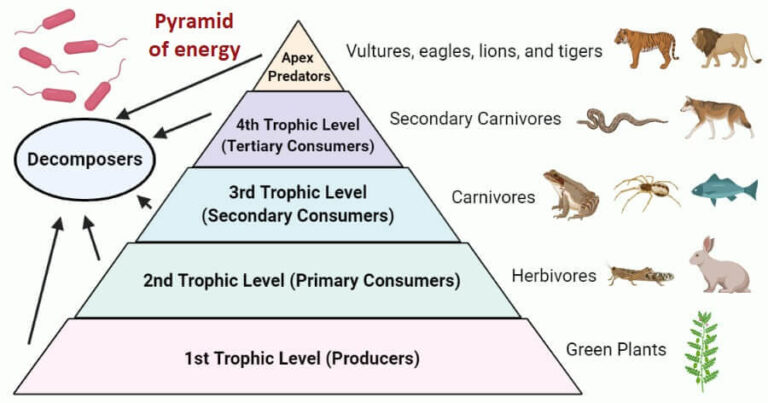
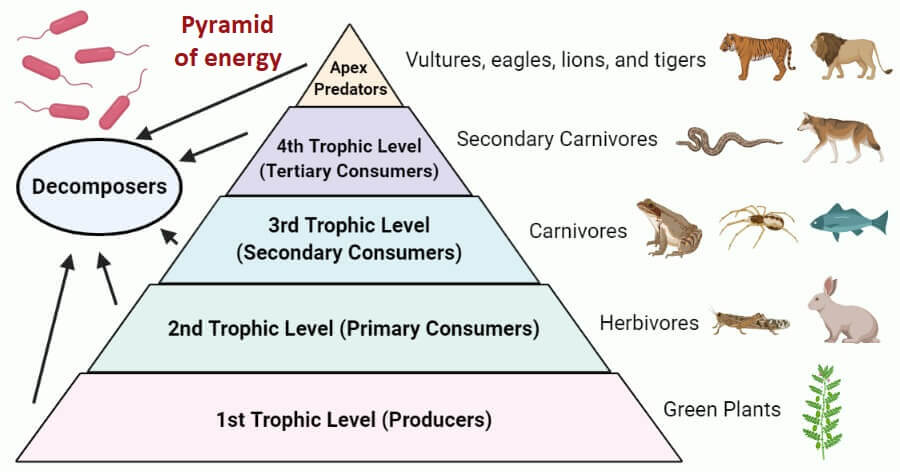
An energy pyramid is a diagram shaped like a triangle that represents the flow of energy through different trophic levels in an ecosystem. The base of the pyramid contains organisms that produce energy, while higher levels contain organisms that consume others for energy.
As energy moves up the pyramid, the amount of usable energy becomes smaller. This is why the pyramid becomes narrower toward the top.
Levels of an Energy Pyramid
An energy pyramid typically includes several levels, each representing a group of organisms in the food chain.
Producers
At the bottom of the pyramid are producers, also called autotrophs. These organisms create their own food using sunlight through Photosynthesis.
Examples of producers include plants, algae, and certain bacteria. They form the foundation of the energy pyramid because they capture energy directly from the sun.
Primary Consumers
The next level contains primary consumers, which are herbivores that eat plants. These organisms receive energy by consuming producers.
Examples include rabbits, deer, grasshoppers, and many other plant-eating animals.
Secondary Consumers
Secondary consumers are animals that eat herbivores. They are usually carnivores or omnivores that depend on primary consumers for energy.
Examples include snakes, frogs, and small predators.
Tertiary Consumers
At the top of the energy pyramid are tertiary consumers, which are often large predators. These animals feed on secondary consumers and usually have fewer numbers because less energy is available at higher levels.
Examples include hawks, lions, and sharks.
Why Energy Decreases in the Pyramid
One important rule in ecology is the 10 percent rule. This principle explains that only about 10 percent of the energy from one trophic level is transferred to the next level.
The rest of the energy is lost through heat, movement, and biological processes such as respiration.
Because of this energy loss, ecosystems can support many producers but only a small number of top predators.
Importance of the Energy Pyramid
The energy pyramid is an important concept for understanding ecosystems. It helps explain:
- How energy flows through food chains
- Why predators are fewer than herbivores
- How ecosystems maintain balance
- The relationship between different organisms
Scientists use energy pyramids to study environmental changes and the impact of human activities on ecosystems.
Energy Pyramid vs Food Chain and Food Web
While a food chain shows a single path of energy transfer and a food web shows multiple interconnected food chains, the energy pyramid focuses specifically on the amount of energy available at each level.
Together, these concepts help explain how ecosystems function and how organisms rely on each other.
Conclusion
The energy pyramid is a powerful tool for understanding how energy flows within ecosystems. By showing the relationship between producers, consumers, and predators, it illustrates the balance that exists in nature.
Through the study of energy pyramids in Ecology, scientists and students can better understand how ecosystems work and why protecting the environment is essential for maintaining life on Earth.