



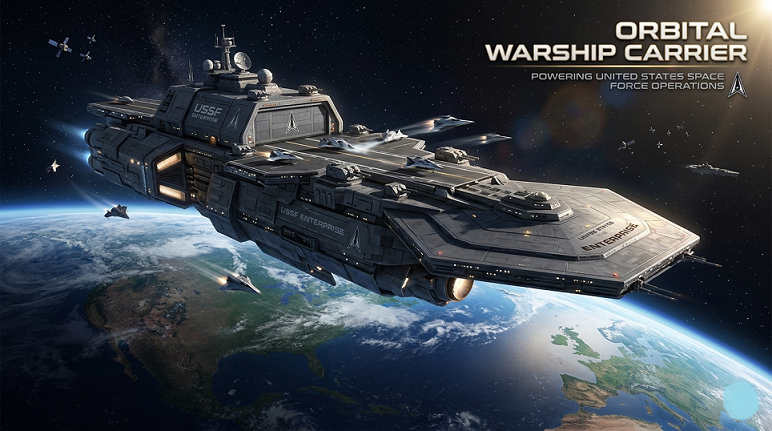
The concept of a space force orbital warship carrier is rapidly evolving from science fiction into a plausible future reality. As global powers invest heavily in space technology, the idea of deploying advanced warship carriers in orbit is becoming a strategic priority. These carriers would act as command hubs, launch platforms, and defensive shields in the ever-expanding domain of space warfare.
What Is a Space Force Orbital Warship Carrier?
A space force orbital warship carrier is a large, highly advanced spacecraft designed to operate in Earth’s orbit or beyond. Similar to naval aircraft carriers, these orbital carriers would deploy smaller spacecraft such as fighter drones, reconnaissance satellites, and defense systems.
Unlike traditional military assets, orbital warship carriers would function in a zero-gravity environment, requiring cutting-edge propulsion systems, AI integration, and autonomous operations.
Key Features of Orbital Warship Carriers
1. Advanced Launch and Recovery Systems
These carriers would be equipped with systems to deploy and retrieve smaller spacecraft efficiently. This includes:
- Drone fighters
- Surveillance satellites
- Interceptor crafts
2. Artificial Intelligence Integration
AI would play a crucial role in:
- Threat detection
- Autonomous defense systems
- Mission coordination
3. Energy-Based Weapons
Future orbital carriers may utilize:
- Laser weapons
- Directed energy systems
- Electromagnetic railguns
These weapons provide precision targeting and faster response times compared to conventional missiles.
4. Modular Design
A modular structure allows upgrades without replacing the entire system. Modules may include:
- Communication hubs
- Weapon systems
- Defense shields
Strategic Importance of Space Warship Carriers
Global Military Dominance
Control of space assets means control over communication, surveillance, and navigation systems. A space force orbital warship carrier would provide a significant strategic advantage.
Satellite Protection
With increasing reliance on satellites, protecting them from cyber and physical threats is critical. Orbital carriers could serve as defensive shields for national infrastructure.
Rapid Response Capabilities
These carriers enable quick deployment of defense systems anywhere in orbit, reducing response time in emergencies.
Challenges in Developing Orbital Warship Carriers
1. High Development Costs
Building and maintaining such advanced spacecraft requires massive investment in research, engineering, and infrastructure.
2. Space Debris Risks
Operating large carriers in orbit increases the risk of collisions with debris, which could damage critical systems.
3. Legal and Ethical Concerns
The militarization of space raises concerns under international laws and treaties designed to keep space peaceful.
Technologies Powering the Future
Several emerging technologies are making orbital warship carriers possible:
- Reusable rocket systems for cost-effective launches
- Nuclear or advanced propulsion systems for long-term missions
- Quantum communication for secure data transmission
- Robotics and automation for maintenance and combat operations
Potential Role in Future Warfare
The battlefield is expanding beyond land, sea, and air into space. Orbital warship carriers could:
- Disable enemy satellites
- Provide real-time battlefield intelligence
- Support terrestrial military operations
- Establish dominance in space-based defense
Conclusion
The space force orbital warship carrier represents a transformative shift in military strategy and technological innovation. While still in the conceptual or early development stages, these carriers could redefine global defense systems in the coming decades. As nations continue to invest in space capabilities, the race to dominate orbital warfare is only just beginning.