



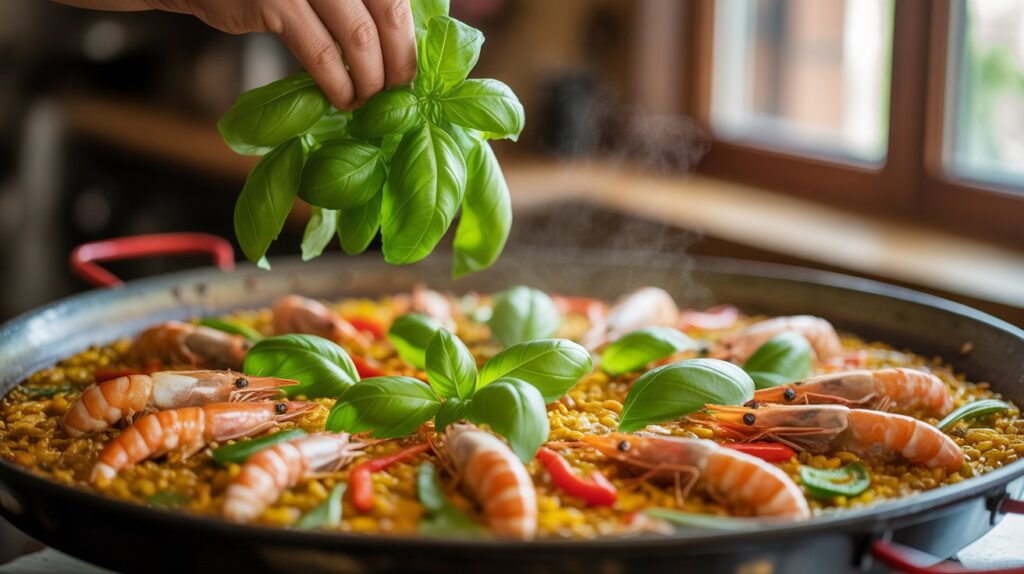
Basil in Spanish Food is a fragrant herb widely used in Mediterranean cooking, and it also plays an important role in Spanish cuisine. Known for its sweet, slightly peppery flavor, basil enhances many dishes ranging from fresh salads to hearty sauces. Many people often associate basil with Italian cooking, but Spanish kitchens also use it to complement vegetables, seafood, and tomato-based recipes.
Chefs and home cooks in Spain appreciate basil for its aroma and freshness and often use it to add depth and brightness to their meals.
What Is Basil?
Botanists classify basil as a leafy green herb in the mint family and identify it scientifically as Ocimum basilicum. Farmers commonly grow it in warm climates, and many Mediterranean dishes use it as a key ingredient.
How Basil Is Used in Spanish Food
Basil is versatile and can be used in many different types of Spanish dishes. Its fresh aroma works well with vegetables, meats, and seafood.
1. Tomato-Based Dishes
Spain uses tomatoes in many recipes such as sauces, salads, and stews. Basil pairs perfectly with tomatoes and adds a refreshing herbal flavor.
2. Mediterranean Salads
Fresh basil leaves are often chopped and added to salads with ingredients like olive oil, cheese, and tomatoes. This combination creates a simple yet delicious Mediterranean flavor.
3. Sauces and Dressings
Spanish chefs use basil in homemade sauces and dressings. It blends well with olive oil, garlic, and lemon juice to create flavorful toppings for grilled foods.
4. Seafood Dishes
Because Spain is famous for seafood, basil is sometimes used to enhance fish and shellfish dishes. The herb helps balance the richness of seafood with its light and aromatic taste.
5. Vegetable Recipes
Basil also works well with roasted or sautéed vegetables. It adds freshness and aroma to dishes made with zucchini, peppers, eggplant, and tomatoes.
Popular Spanish Dishes That Use Basil
Although basil is not as dominant as herbs like parsley in Spanish cuisine, it still appears in several recipes:
1. Spanish Tomato Salad
A simple salad made with fresh tomatoes, olive oil, garlic, and basil leaves.
2. Mediterranean Vegetable Stew
Some variations of vegetable stews include basil to enhance the flavor of the vegetables.
Health Benefits of Basil
Besides its delicious flavor, basil offers several health benefits:
Rich in Antioxidants
Basil contains compounds that help protect the body from oxidative stress.
Supports Digestion
The herb can help improve digestion and reduce bloating.
Anti-Inflammatory Properties
Basil contains natural compounds that may help reduce inflammation.
Boosts Immunity
Its vitamins and minerals support a healthy immune system.
Tips for Cooking with Basil
If you want to use basil in Spanish cooking, these tips can help:
Use fresh basil when possible – Fresh leaves provide the best flavor.
Add basil at the end of cooking – This preserves its aroma and taste.
Pair it with olive oil and garlic – These ingredients are common in Spanish recipes and enhance basil’s flavor.
Store basil properly – Keep fresh basil in water or in the refrigerator to maintain freshness.
Basil in Mediterranean Culture
Across the Mediterranean region, herbs like basil symbolize freshness, flavor, and healthy living. Spanish cooking emphasizes simple ingredients and natural flavors, which makes basil a perfect addition to many recipes.
Although parsley and oregano are more common in Spain, basil still contributes a unique taste that fits perfectly with Mediterranean ingredients like tomatoes, olive oil, and garlic.
Conclusion
Basil is a flavorful herb that enhances many Spanish dishes with its fresh and aromatic taste. From salads and sauces to seafood and vegetable recipes, basil adds a light yet distinctive flavor to Mediterranean cooking. Whether you are preparing a traditional Spanish recipe or experimenting with new flavors, basil can elevate your dishes and bring a touch of freshness to every meal.