




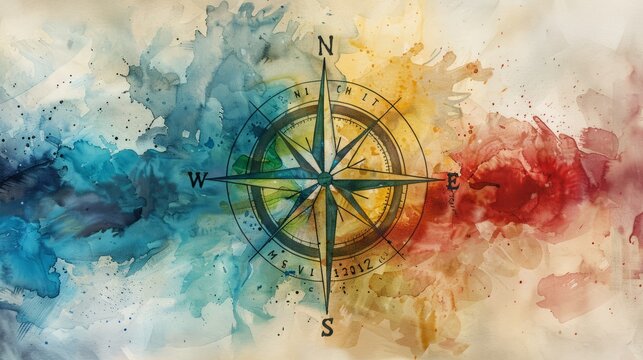
A compass rose compass is a fundamental tool in navigation and map reading. It is the symbol printed on maps and nautical charts that shows the orientation of the cardinal directions—North, South, East, and West—as well as intermediate directions like Northeast, Northwest, Southeast, and Southwest. By using a compass rose, travelers, sailors, and explorers can determine direction accurately and navigate effectively.
Understanding the compass rose is essential for anyone interested in geography, sailing, hiking, or general navigation.
What Is a Compass Rose?
The compass rose compass is a circular figure marked with points corresponding to the directions. Its main purpose is to help users determine orientation relative to the Earth’s magnetic field or map grid.
Traditional compass roses often include:
- Cardinal Directions: North (N), East (E), South (S), West (W)
- Intercardinal Directions: Northeast (NE), Southeast (SE), Southwest (SW), Northwest (NW)
- Secondary Intercardinal Directions: North-Northeast (NNE), East-Northeast (ENE), and so on
Some compass roses also indicate degrees, dividing the circle into 360 degrees, which helps with precise navigation.
History of the Compass Rose
The compass rose has a rich history that dates back to ancient times. Early sailors used wind roses to show prevailing winds, which evolved into the compass rose as magnetic compasses were developed.
During the Age of Exploration, the compass rose became a vital tool for mapmakers and navigators. Its design has evolved over centuries, but its purpose—showing direction—remains the same.
How the Compass Rose Works
A compass rose works in conjunction with a compass needle, which aligns with the Earth’s magnetic field. By comparing the needle to the compass rose, navigators can:
- Determine their heading or bearing
- Plot a course on a map or nautical chart
- Correct navigation when traveling across unfamiliar terrain or open seas
Modern digital compasses in smartphones and GPS devices often include a compass rose for easy orientation.
Types of Compass Roses
Compass roses come in several designs:
- Traditional Compass Rose: Often decorative, found on historical maps.
- Magnetic Compass Rose: Used with a magnetic compass to show true North and magnetic North.
- Modern Compass Rose: Found on digital maps and GPS devices, usually simpler and functional.
Importance of the Compass Rose Compass
The compass rose is not just a decorative symbol—it is crucial for accurate navigation. It:
- Helps travelers and sailors find direction
- Assists in map reading and orienteering
- Provides a visual reference for bearings and headings
- Enhances safety during exploration or outdoor adventures
Even in the digital age, understanding a compass rose remains a valuable skill for adventurers and navigators.
Fun Facts About the navigation tool
- Many historical compass roses include a fleur-de-lis symbol pointing North.
- The number of points on a compass rose can range from 4 (cardinal) to 32 (including all intercardinal and secondary directions).
- The term “rose” refers to the circular, petal-like design of the direction lines.
Conclusion
The compass rose compass is a timeless navigation tool that combines functionality and design. Whether on paper maps, nautical charts, or digital devices, it continues to guide explorers, sailors, hikers, and travelers. Understanding how to read a compass rose is essential for anyone who wants to navigate the world confidently and safely.